
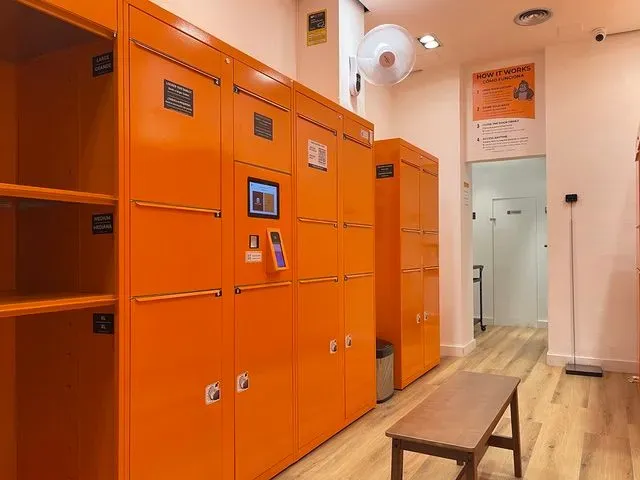

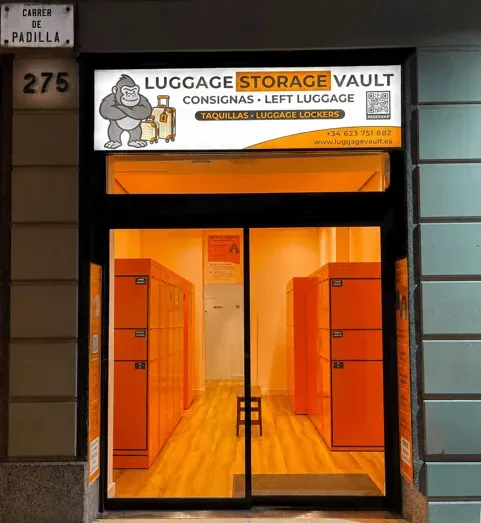
James Steortz spent more than 30 years in hospitality, working in bars and restaurants in London, New York and Las Vegas. Today he runs Luggage Storage Vault, an unattended luggage storage on Carrer de Padilla in Barcelona, a three-minute walk from Sagrada Família.
"That experience shaped my approach to customer service, and I've brought the same care and attention to Luggage Storage Vault."
The idea came from his own travels: he used luggage lockers, found them incredibly convenient and saw an appealing business model.
"Initially, I imagined I could open a facility and largely leave it to run itself. I soon discovered there was more to it than that."
From Salamanca to Sagrada Família
James's connection to Spain goes back to 1995, when he studied at the University of Salamanca. He kept coming back, and after the pandemic he sold his home in the United States, left his job and moved to Barcelona, planning to semi-retire and teach yoga. A two-level spinal fusion in 2024 made teaching more physically demanding than he wanted for his main occupation, so he started looking for another direction.
He chose Carrer de Padilla because it serves two customer groups at once: visitors to Sagrada Família, 350 metres from the basilica's Marina entrance, and guests staying in the many holiday apartments nearby, who need somewhere to store their bags before check-in or after check-out.
Months of research before opening
James spent several months researching locations and studying luggage storage businesses across Barcelona, the rest of Spain and Europe. There were plenty of examples, but only a few that he felt were doing it exceptionally well. What surprised him most was the difference in attitude between operators.
"Some were clearly passionate about their service; others seemed to regard automation as a reason to step away from the business entirely. For me, a business that operates 24/7 needs customer support to match. If someone cannot access their belongings, even five or ten minutes without a response can feel like a long time."
He investigated every locker and software supplier he could find, and even visited one manufacturer's factory. They told him he was the first prospective customer to accept their invitation. For the hardware, he focused on steel thickness, sturdiness and, above all, usable internal dimensions: how much luggage actually fits inside, and the right mix of compartment sizes.
He nearly chose that manufacturer, because its lockers were very well built. In the end, its software wasn't the right fit.
Why LockMe
The deciding factor was the mobile booking experience.
"The other supplier's platform felt dated and designed primarily for desktop use. Our customers are often standing on the street booking on their phones, so I wanted something modern, intuitive and easy to navigate."
LockMe connected reservation, payment, store access and locker opening into one straightforward customer journey. And one conversation stuck with him:
"I asked the team whether this was a finished product. They said it was an ongoing product that would never really be finished. That told me they intended to keep improving it and would be receptive to ideas."
As one of LockMe's earliest clients, James worked closely with the team and contributed suggestions for the booking interface. Today, a customer can book a locker in about two or three minutes.
From empty premises to first customers
It took about two and a half months from renting the premises to opening. Manufacturing and delivery overlapped with Christmas and New Year, so James stayed in close contact with LockMe and the locker manufacturer, Setroc, to keep the planned 2 January delivery on schedule. He opened on 6 January.
January was quiet, as expected, with sales of under €300 that first month. The business has grown a lot since then.
What the day looks like now
James spends between four and eight hours a day on the business, but only about 15 minutes of that at the store: tidying, sweeping and checking that the lockers are clean. The rest happens remotely: the website, SEO, reviewing bookings, responding to reviews and helping customers through WhatsApp and the in-store intercom.
"There is no employee stationed in the store, but I make myself available for support 24/7. If someone needs help at seven in the morning, I can respond from my phone at home. Sometimes I use the intercom simply to welcome a customer or thank them for booking."
The system handles reservations, payments and locker access, so he doesn't need to process every transaction or be there to let people in. That leaves his time for the customers who need help and for growing the business.
The feature he wouldn't give up
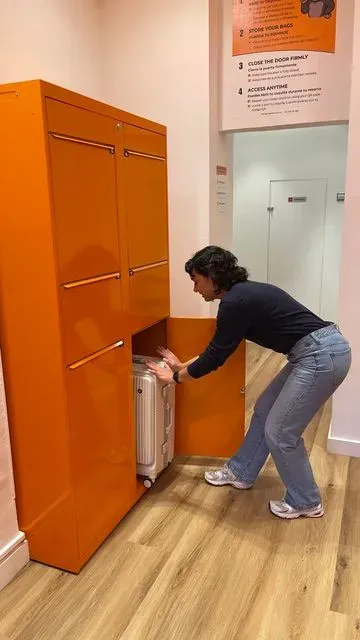
If he could keep only one LockMe feature, it would be early check-in, which he suggested himself.
"Customers often arrived 20 or 30 minutes before their booking and had to wait. If their locker was available, I didn't see the point in keeping them sitting there when they could be out enjoying their day."
LockMe added the option for each operator to set their own early check-in allowance; James uses 15 minutes. He also values the 10-minute grace period at collection ("I hate the idea of charging a customer who is a few minutes late") and the recent option for customers to modify their bookings, with a cut-off the operator chooses. His is two hours before the booking starts.
What a year has taught him
Running a business remotely still means being responsible for it. On a recent trip to San Sebastián, he kept answering questions and helping customers.
He has also learned the daily rhythm: most drop-offs happen between 9 am and 12 pm, and most collections between 4 pm and 8 pm. Customers need more help on arrival; by collection time they usually understand the process.
Small changes make a big difference, too. Customers who needed more than five hours used to have to book a full day, which could tie up a locker until the following morning. James asked for a 12-hour option, and LockMe implemented it within hours of his request.
What he would do differently
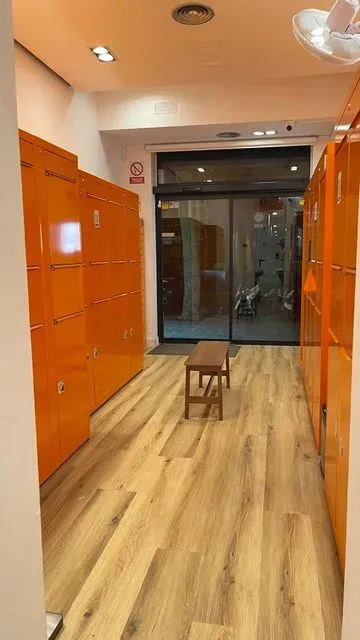
The locker size mix. He installed equal numbers of Medium, Large and XL lockers, but demand is far from even: Medium lockers see much less use, so in another store he would give more space to Large and XL.
No key lockers. He expected that offering key collection for holiday-apartment guests would bring in luggage storage customers too. In practice, many arrive late at night, sometimes around 2 am, just to pick up their keys and go straight to their accommodation.
"Actual operating experience has taught me far more about the right mix of services and locker sizes than I could predict before opening."
What's next
James is exploring a second location in Barcelona, looking closely at nearby accommodation, competition, demand and rent. It needs to serve its own customer area and pay for itself. AI tools like ChatGPT and Claude have helped him with everything from the website to researching locations: he now compares potential sites with an interactive map that shows licensed tourist accommodation and existing storage options within 300 metres of each premises.
James's advice to other operators
"My first response would be, 'Don't do it, I don't need the competition!' Joking aside, I would encourage anyone considering it to be realistic about both the market and the work involved."
He spends considerable time on the website, SEO and the Google Business Profile, using tools such as Local Falcon, Semrush, SEO audit tools, Microsoft Clarity, Google Business Profile, Google Analytics, the Google Ads Keyword Planner and Google Search Console to understand performance. It's more work than he expected, with a steep learning curve for people without experience.
"Around Sagrada Família, I already consider the storage market crowded, yet new facilities continue to open. Being close to a major attraction is no guarantee of success. The providers that work hard will succeed, while those who think this is a set-it-and-forget-it type of business will struggle to survive."
His final advice: research the immediate area carefully (where customers stay, what storage already exists, whether realistic sales cover the rent in quieter months), choose locker sizes based on what customers need, and be ready to run a service business.
"Automation handles much of the transaction, but customer support, cleanliness, security and ongoing attention remain your responsibility."
— James Steortz, founder and owner of Luggage Storage Vault, Barcelona